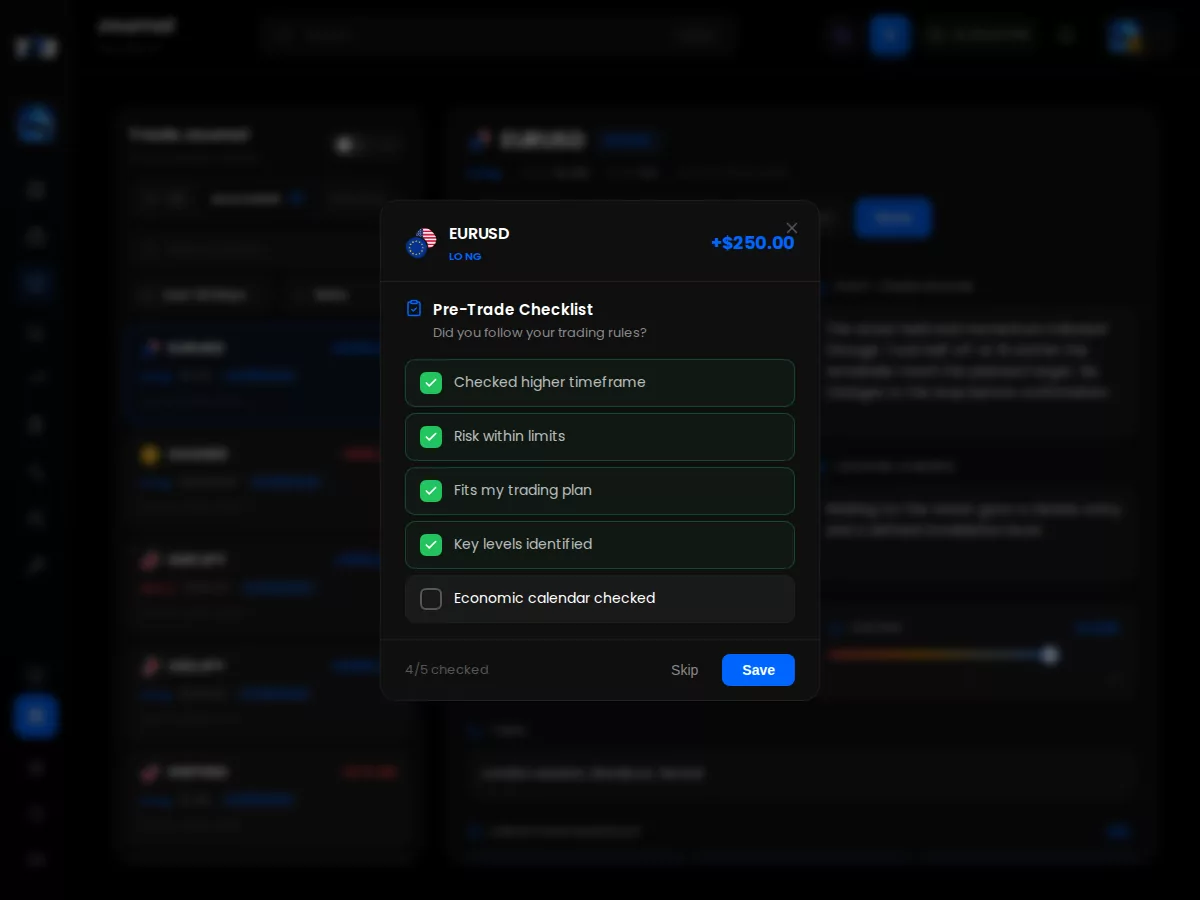
Fill in the date, pair and setup at the top, using the same reference terms as your journal. Tick the paper only when you have checked the condition. The boxes on this page are printable marks, not online controls that save progress.
Before the trade: establish permission and risk
The first eight prompts ask whether the market and session fit your plan, whether relevant news has been checked and whether the setup conditions are present. Then state the entry trigger and invalidation, define the initial stop and exit plan, and calculate size using your risk limit and broker contract. Review spread, costs and correlated exposure together. Finally, check daily limits and your willingness to skip. An unchecked prerequisite calls for resolving it or following the plan’s no-trade rule, not ticking it to complete the sheet.
During the trade: compare the order with the plan
The next five checks concern the filled entry and size, protective orders, written management rules, avoiding wider risk and recording any change. Compare the actual fill with the intended order and check the protective orders themselves. If you change management, write the action and reason in the notes space while the context is clear. Leave a missed rule visible instead of retrospectively marking it as followed.
After the trade: record outcome and execution separately
The final five prompts cover actual exit, costs and net result; chart context and review notes; rules followed or missed; one lesson; and daily limits before another trade. Use fills and costs for the result. Use the original plan to judge execution. The lesson should name an action you can check next time, such as waiting for the planned confirmation.
A completed-review example
The journal template’s EX-002 sells 0.25 GBPUSD lots at 1.2700 and exits at the original 1.2740 stop. Its $100 price loss and $2 costs produce -$102 net. The review identifies an entry before the planned confirmation. On this checklist, leave the unmet setup or trigger check visible and write “Wait for confirmation” in the lesson space. Do not mark execution as correct merely because the original stop was used.
Adapt and reuse it
Edit the downloadable text to replace broad prompts with your actual session, news, exposure and daily rules. Keep the before, during and after order. Print a fresh copy for each trade and keep it with that trade’s chart and notes. During the weekly review, look for repeated unchecked items and choose one behaviour to address.