Know your baseline.
Watch for drift.
Once you have a process you can repeat, the journal has a different job. It helps you notice when the trades you take stop matching the process you intended to run. A profitable period can hide looser entries or larger risk just as a losing period can contain disciplined execution.
Keep your setup definitions, risk decisions and review periods stable enough to compare. When you change a rule, name the version in your notes or tags. You need to know whether the latest results came from the familiar process or from an experiment you quietly introduced.
- Review participationCheck whether you are still taking the planned symbols and hours, or adding trades because the routine feels familiar.
- Review the downsideRead drawdown and average losses alongside the entries that caused them. Check for size changes and repeated exceptions.
- Review the source of profitLook at symbol and session contributions. A strong total can depend on a narrow group of trades.
- Keep the exceptionsJournal skipped rules and unusual conditions even when the trade wins. Otherwise process drift can look harmless.
Use several measures.
Read them together.
Win rate describes how often trades win. It does not show the size of those wins relative to losses. Profit factor, average wins and losses, expectancy and drawdown add different context. Read them over comparable periods and check the trade count before interpreting a change.
| Observation | Possible question | Journal evidence |
|---|
| Higher win rate, weaker results | Are winners being closed sooner or losses getting larger? | Exit reasons, stop changes and holding time. |
|---|
| More P&L, deeper drawdown | Did risk increase as well as profit? | Size, planned risk and overlapping positions. |
|---|
| One symbol carries the period | Has your opportunity mix changed? | Setup tags and market conditions for each symbol. |
|---|
On a phone, scroll the table sideways.
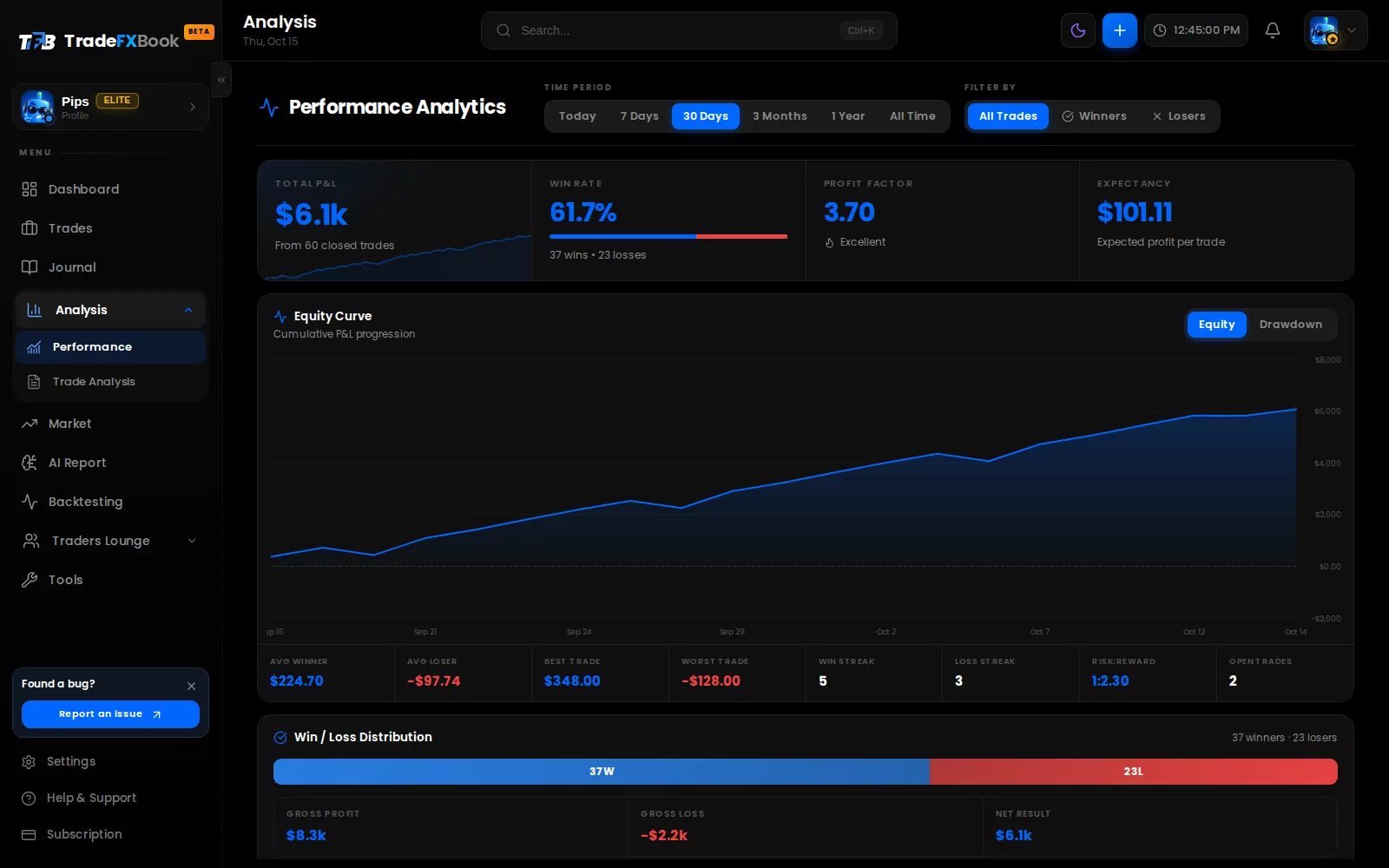
Performance analyticsKeep the curve
beside the statistics.
Review equity and drawdown with profit factor and average results. Pro and Elite provide all analytics timeframes for comparisons beyond the latest month.
Explore analytics →
 ↗
Give a change a fair test.
Keep the original record.
Write down the reason for the change before testing it. A revised exit rule should address a repeated finding in your journal, rather than the discomfort of the most recent loss. Decide which outcomes you will compare, including trade frequency and the losses you would have accepted.
In historical replay, practise the existing rule and the proposed rule on comparable conditions. Avoid selecting only dates where you remember the market moving cleanly. Save the rules so a later session does not become a slightly different test.
Keep simulated results distinct from live account results. A replay can help you evaluate decisions without live capital, but it cannot establish that the same fills or behaviour will occur in a live account.
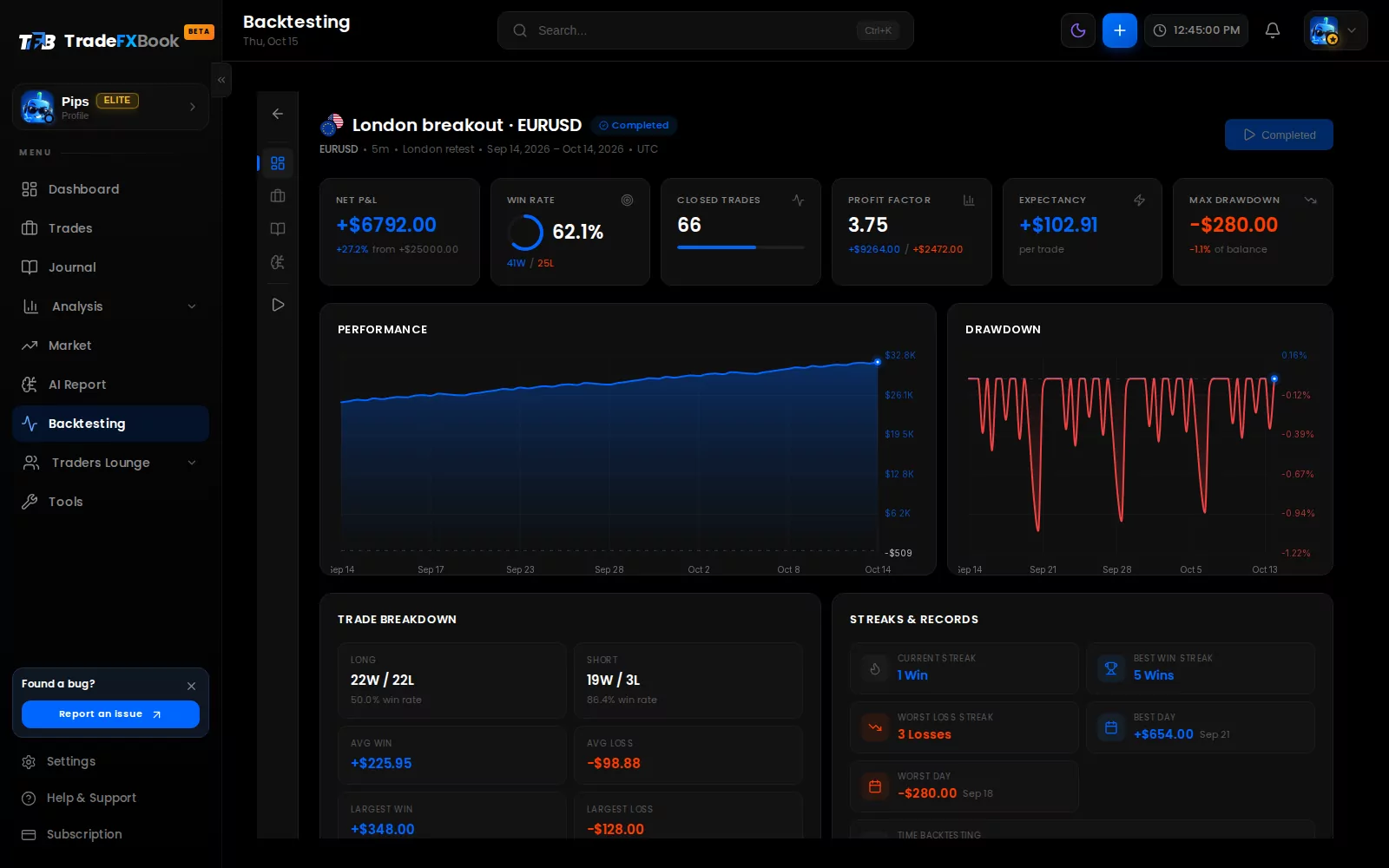
Backtest resultsReview the test.
Keep the rule visible.
Elite includes unlimited historical backtest sessions and up to 50 saved strategies. Use the session report to review simulated trades before choosing what to practise next.
See historical backtesting →
 ↗
Pro is $12.99/month for unlimited history, all analytics timeframes and 3 MT4/MT5 accounts. Elite is $22.99/month when you also need backtesting or unlimited connected accounts.
Compare plans →