Keep the reason
through the life of the trade.
A swing position can stay open while the market context, economic calendar and your own confidence change. Without an original note, it is easy to remember a different reason for the entry after the price has moved. A useful journal keeps the starting thesis visible through the final review.
Write the higher-timeframe context, the entry trigger and what would invalidate the idea. Separate that from the rules for managing the position. A trade can still fit the thesis while an exit rule has been reached, or remain open after the original reason has failed.
- Before entryRecord the chart timeframe, level or structure, trigger, original stop and target, and the cash risk behind the chosen size.
- Across sessionsNote relevant scheduled events and your plan for holding overnight or through a weekend. Keep the timezone clear in dated updates.
- When the plan changesAppend a dated explanation in your notes for moving a stop, reducing the position or changing an exit. Preserve the original reason.
- After the final exitCompare the original thesis, actual management and recorded result. Explain whether the exit followed a rule or a reaction to open P&L.
Keep the chart context.
Keep the changes separate.
Use a screenshot that shows the timeframe and level behind the idea, not just the final entry candle. Keep the original pre-trade analysis and add the completed review in the post-trade field. If you update notes while the position is open, date the additions so you can follow the reasoning later.
Include the exposure of related positions in your review. Several trades held across days can share a currency or broad market direction even if the symbols differ. Review that overlap alongside the decision to add another position.
Swing trade notesSave the thesis.
Explain the management.
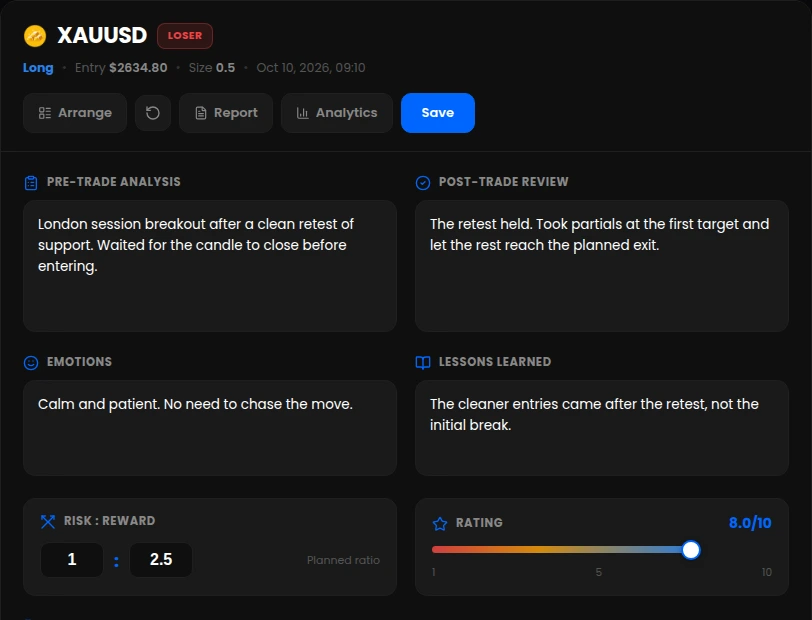
The journal separates original analysis, post-trade review, emotions and lessons. Use those fields to preserve both the plan and the decisions that followed.
Explore trade journaling →
 ↗
Give a longer trade
a complete cost review.
Price movement is only part of a position held overnight. Review any recorded swap or financing with commission and the final result. The charge or credit can depend on the instrument, direction and broker, so use the actual account record rather than assuming the same cost for every trade.
| Review area | Read together | Question to answer |
|---|
| Thesis and invalidation | Original analysis, entry chart and stop placement. | Did the trade fit the idea you wrote before entry? |
|---|
| Management over time | Dated note additions and changes to stops or exits. | Was new information relevant, or did open P&L drive the change? |
|---|
| Holding period and costs | Entry and exit dates, recorded swap and commission. | How did the holding period affect the final account result? |
|---|
| Related positions | Other exposure held during the same period. | Did several positions depend on the same market outcome? |
|---|
On a phone, scroll the table sideways.
A month may contain few completed swing trades. Read trade counts and holding periods before treating a short period as a dependable verdict. Keep earlier trades available so a review is not dominated by the last position to close.
TradeFXBook’s session analytics group trades by closing time, so a session label does not describe every session a swing trade passed through. Use entry and exit dates and your dated notes to review the full holding period.
Performance analyticsReview the period.
Return to the thesis.
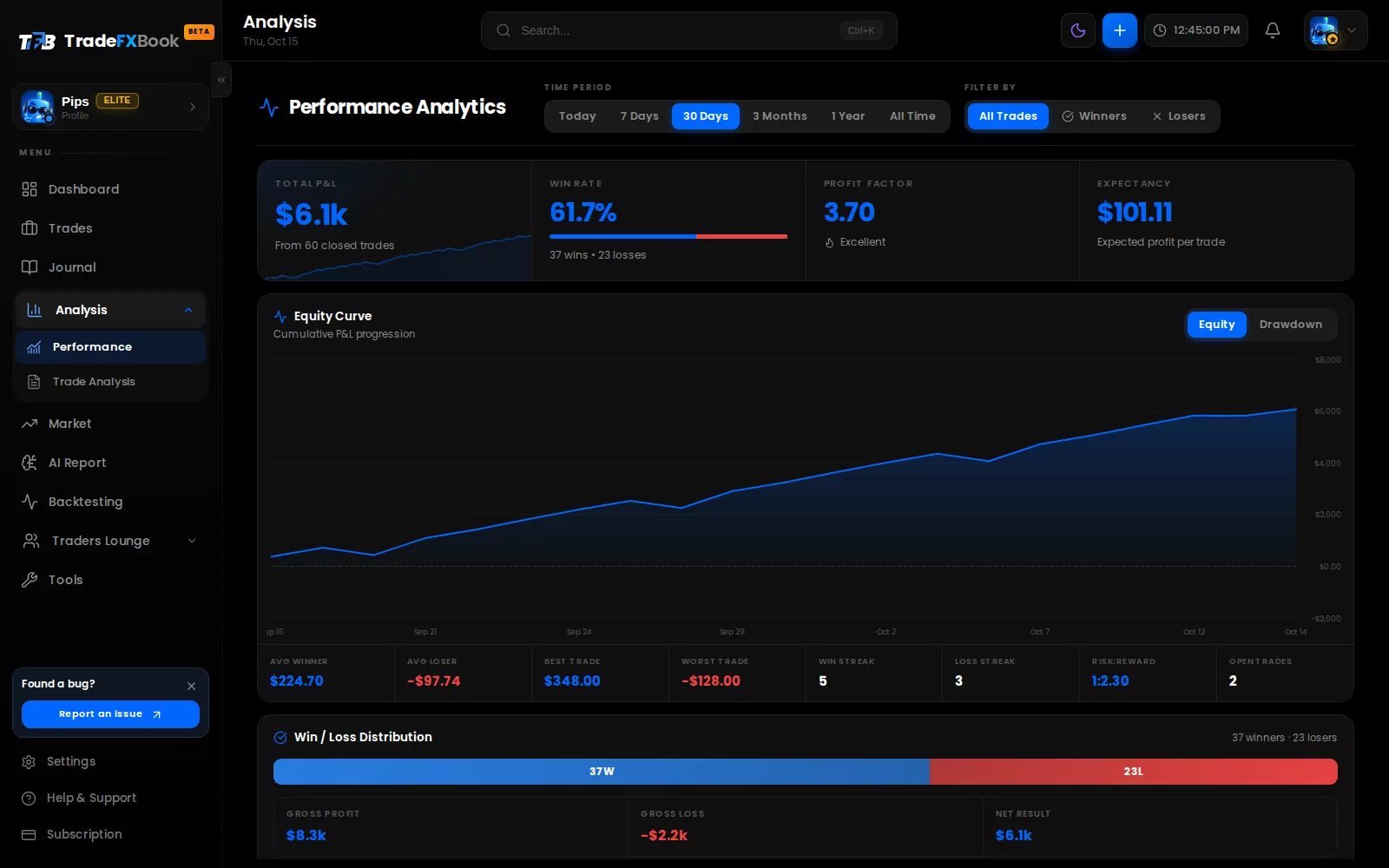
Pro and Elite provide all analytics timeframes. Use equity, drawdown and holding-time summaries to locate trades, then read the decisions in the journal.
See performance analytics →
 ↗
Pro is $12.99/month for unlimited trades and history, unlimited tags, all analytics timeframes and sync for 3 MT4/MT5 accounts. A longer record helps when completed trades are spread across months.
Compare plans →