Learn from the decision.
Then read the result.
When you are new, a winning trade can feel like proof that a setup works. A losing trade can make you abandon the same idea. Neither result explains whether you followed a sensible plan. Your first journal should help you tell a planned decision from an improvised one.
Keep the routine small enough to repeat on demo trades as well as live trades. Describe what you saw before entry and what would make the idea wrong. After the trade, check that description against what you actually did. You are building a record you can understand later, even when the chart no longer looks familiar.
A loss taken according to your rules and a win from a rushed entry teach different lessons. Rate the decision separately from how pleased you are with the result.
What to write.
Keep it concrete.
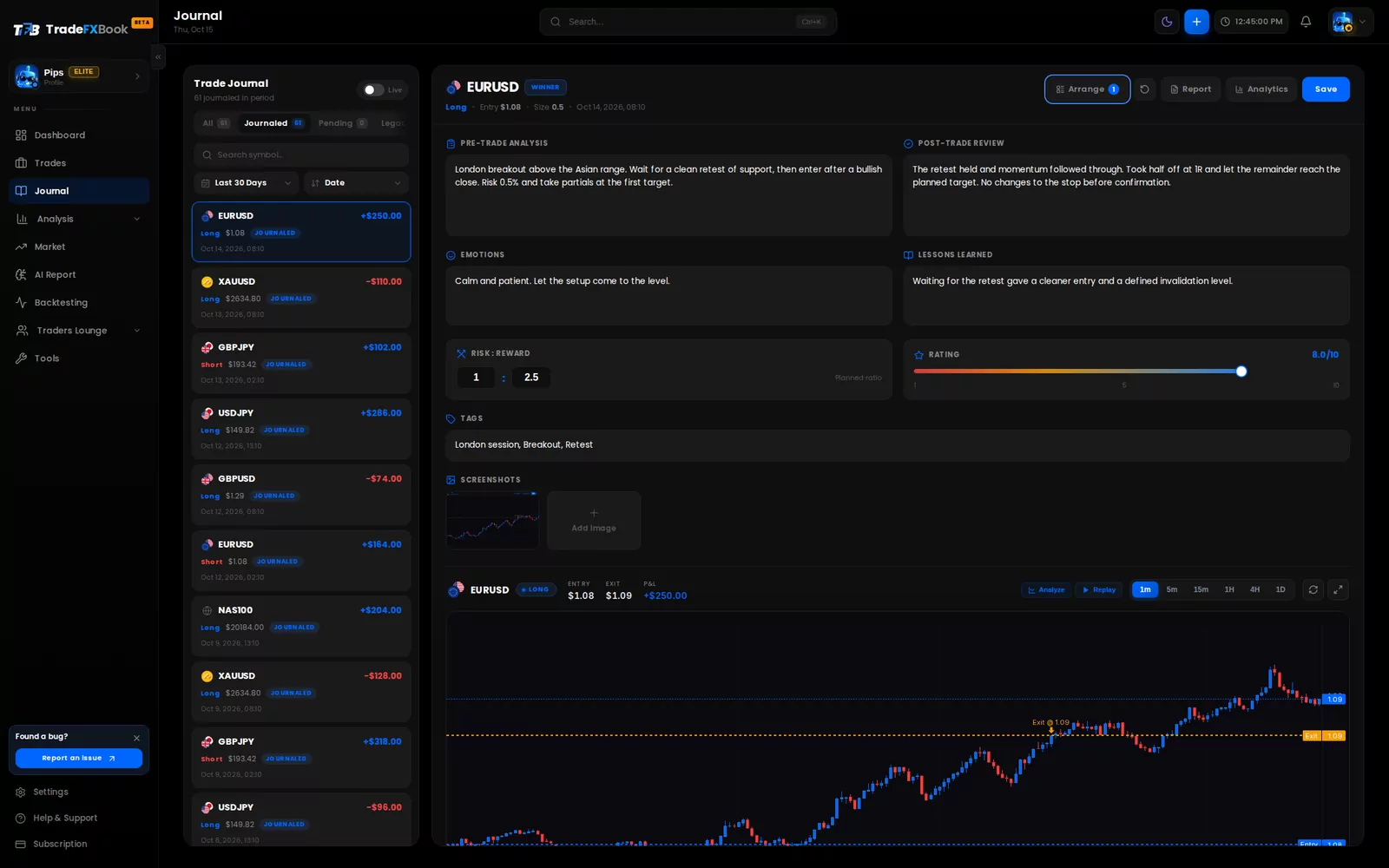
A useful note explains an action. “I was impatient” is a start. “I entered before my confirmation because price was moving away” gives you something to recognise next time. TradeFXBook keeps pre-trade analysis, post-trade review, screenshots, tags and a personal rating beside the trade.
- Before entryWrite the setup, the entry condition, your stop and target, and why that position size fits the risk you planned.
- Save the chart contextCapture the level and timeframe you used. A screenshot should show what was visible when you decided, rather than only the move that followed.
- After exitRecord why you closed, whether you changed the original plan, and one thing to repeat or practise.
- Use a few clear tagsGive the same setup the same name. Keep setup labels distinct from mistakes so a loss does not automatically become a “bad setup”.
Trading journalThe reason stays
with the trade.
Use the separate pre-trade and post-trade notes to compare the plan with your execution. The screen shows where the screenshot, tags and rating fit.
Explore the journal →
 ↗
Read a group of trades.
Choose one thing to practise.
At your weekly review, read all the trades you recorded, including the ordinary ones. Look for repeated decisions: entering without confirmation, moving a stop, or closing because an open profit made you nervous. Also keep examples where you followed the plan and accepted the outcome.
Use win rate, average wins and losses, profit factor and the equity curve as context. A short run of trades is too small to establish a dependable edge. Read the notes behind a number before deciding that a setup should be dropped.
| What you notice | What to check | What to practise |
|---|
| Repeated early entries | Did your written entry condition actually occur? | Wait for the same defined confirmation. |
|---|
| Different size on similar trades | Did stop distance or your risk decision change? | Write the size and risk reason before entry. |
|---|
| Good decisions with losing results | Was the stop part of the original plan? | Keep following the rule while collecting more evidence. |
|---|
On a phone, scroll the table sideways.
Finish with a specific instruction for your next practice session. “Wait for the retest described in my plan” is easier to review than “be more disciplined”. The trade journaling guide walks through the full routine.